
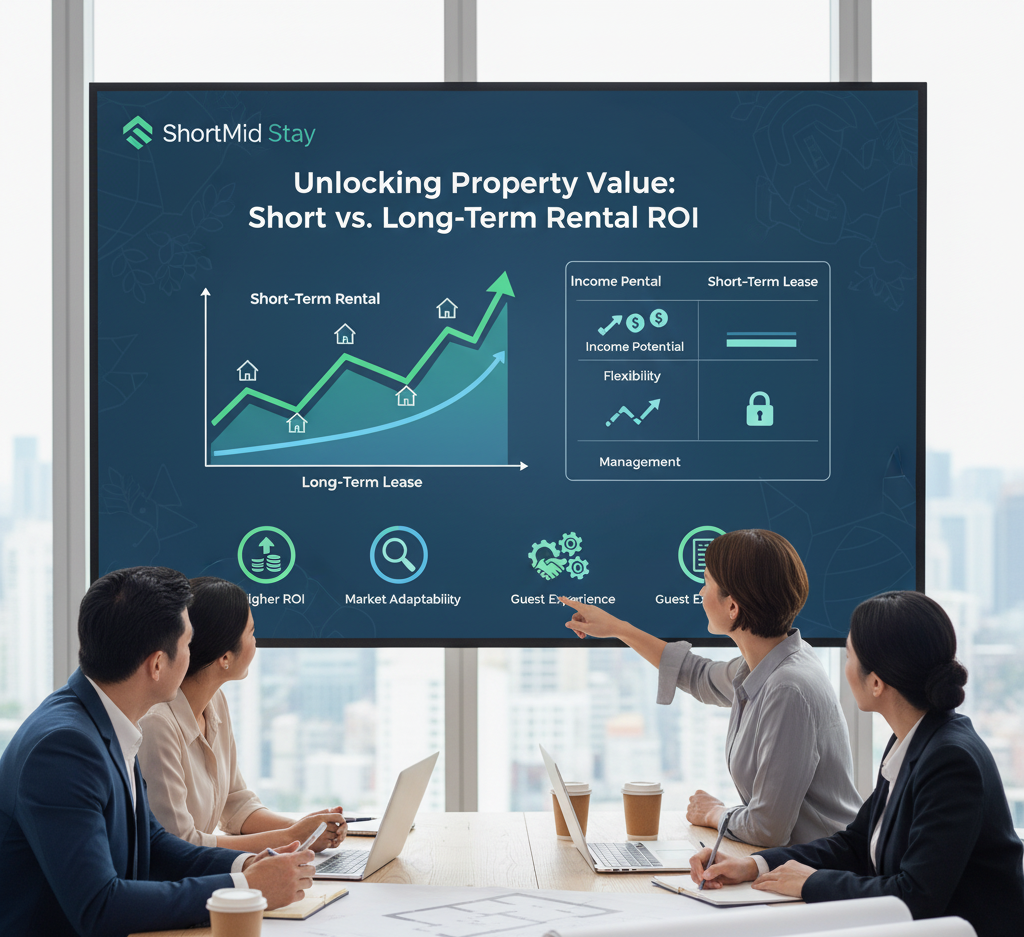
When property owners talk about “value,” the conversation often stays stuck on appreciation, comps, and resale. But there is another kind of value that is easier to measure month to month: income potential. In many markets, a well-run short-term rental can shift a home from a static asset into a performance asset, where revenue history, guest demand, and professional operations can strengthen both cash flow and market appeal.
This guide breaks down how short-term rentals property value increases in practical terms, what strategies owners use to improve ROI, and how to compare short- vs long-term returns without guessing.
Why Short-Term Rentals Add Value Beyond Traditional Leasing
Short-term rentals can create value because they introduce two advantages long-term leasing typically cannot match: pricing flexibility and demand stacking.
Higher Revenue Potential Per Available Night
Unlike a fixed monthly lease, short-term pricing can rise during high-demand periods, peak seasons, and event weekends. Over time, this can lift average monthly revenue even if occupancy is not 100%.
Flexible Use Without Losing Income Momentum
Owners can block dates for personal use, maintenance, or seasonal repositioning. That flexibility can matter if your long-term plan includes selling, renovating, or holding the home for future family use.
Broader Demand Pools
Short-term and mid-term rentals can attract: business travellers, relocating families, project-based professionals, remote workers, and leisure guests. Serving multiple demand segments reduces reliance on a single tenant profile.
Market Proof That Buyers Notice
When a property can demonstrate consistent, documented performance, it may stand out as a “turnkey income-producing” home to investor buyers and second-home buyers looking to offset costs.
Real Estate Income Strategies That Improve ROI
There is no single “best” model. The strongest outcomes usually come from matching strategy to your location, property type, and risk tolerance.
Vacation-Focused Strategy
If your property sits near attractions, beaches, or high-tourism neighbourhoods, a vacation model may produce strong seasonal spikes. The key is planning for shoulder seasons with smart minimum stays and marketing that targets non-holiday travel demand.
Mid-Term Rental Strategy (1–6 Months)
Mid-term stays often bring steadier occupancy and less turnover than nightly rentals, while still outperforming traditional annual leases in many cases. This approach can be ideal for areas with hospitals, universities, film production, or corporate hubs.
Hybrid Strategy (Short-Term + Mid-Term)
Hybrid operations switch the home’s positioning based on the calendar. For example, you might prioritise short stays during peak months, then shift to mid-term demand during slower periods. This approach is often used to reduce vacancy risk without sacrificing upside.
If you want a clearer view of how a professional operator approaches demand, property positioning, and owner outcomes, start with the ShortMidStay home page here: ShortMidStay.
Rental Return on Investment Tips Owners Can Apply Immediately
Strong ROI is rarely about one big change. It is usually about getting many small operational details right, consistently.
Invest in Durable, Guest-Friendly Furnishings
Choose pieces that look premium but are built for turnover. Durable sofas, wipeable surfaces, and commercial-grade linens reduce replacement costs and protect your margins.
Upgrade the “Bookability” Basics
Fast Wi-Fi, comfortable bedding, strong water pressure, simple self check-in, and clear instructions often produce better reviews than flashy add-ons. Better reviews typically support higher nightly rates over time.
Treat Cleanliness as a Revenue Lever
Cleanliness is one of the biggest drivers of repeat bookings and review performance. Consistent cleaning standards protect both income and the condition of your home.
Use Dynamic Pricing Principles
Rate strategy should shift with day-of-week patterns, seasonality, events, and lead time. This is where professional management often makes the biggest ROI difference because pricing is monitored continuously.
Track True Net ROI (Not Just Gross Revenue)
Utilities, cleaning, consumables, platform fees, maintenance, insurance, and reserve funds should be tracked as part of the ROI equation. A realistic view of net income protects long-term property value by ensuring you can maintain the home properly.
Short vs Long-Term Rental ROI Comparison
Below is a practical comparison owners use when deciding between stability and upside.
| Factor | Short-Term Rentals | Long-Term Rentals |
| Income Potential | Higher nightly rates; upside from events/seasonality | Stable monthly rent; typically lower ceiling |
| Flexibility | Adjust pricing, availability, and stay length | Locked into lease terms |
| Vacancy Risk | Higher if demand drops or reviews slip | Lower if tenant stays long-term |
| Management Needs | Higher operational intensity | Lower once leased |
| Property Value Impact | Can show performance and “income asset” positioning | Shows stability; less revenue storytelling |
The “best” choice depends on your priorities. If you want maximum predictability with minimal operational demand, long-term leasing may win. If you want to optimise for revenue and flexibility, short-term or hybrid models often win.
How Short-Term Rentals Can Influence Resale Value
Resale value is not only about location and finishes. For many buyers, especially investors, it is also about proof.
Income Documentation Can Strengthen Buyer Confidence
A buyer who can review booking history, occupancy patterns, and revenue performance may be more willing to pay for a home that feels “ready to operate.”
Turnkey Presentation Improves Marketability
Professionally staged and maintained properties can photograph better, show better, and create stronger buyer perception. The same factors that improve bookings often help resale presentation too.
Differentiation in Competitive Listings
“Incoming revenue potential” is a strong positioning angle when competing against similar homes, especially in areas where buyers already understand short-term and mid-term demand.
To see examples of how homes are positioned and presented, you can browse: current listings and explore homes suited to longer stays.
Risks to Know (and How Smart Owners Reduce Them)
Short-term rentals are not “set and forget.” Owners who protect ROI plan for common risks.
Regulatory Risk
Some cities restrict where and how short-term rentals operate. Risk reduction starts with researching local rules and choosing a compliant operating approach.
Wear and Tear
Higher turnover can accelerate minor damage. Preventive maintenance schedules and clear house rules help protect the asset.
Off-Season Demand Drops
This is where a hybrid strategy shines. Mixing short stays with mid-term demand often smooths out slow periods.
The Role of Professional Management in Protecting ROI
A major reason owners outsource is simple: professional operations reduce mistakes, improve guest experience, and protect the asset while chasing stronger returns.
Professional management typically covers:
- Listing optimisation and marketing
- Guest communication and issue resolution
- Turnover coordination and quality control
- Pricing adjustments and revenue strategy
- Maintenance coordination and vendor management
If you are evaluating whether to self-manage or partner, this page lays out the owner pathway clearly: Partner with us.
A Smarter Way to Think About Property Value
Short-term rentals are not only about hosting. They are a way to convert a home’s location, layout, and lifestyle appeal into measurable performance. When done well, short-term rentals property value can rise through stronger net income, better market positioning, and resale differentiation built on real results.
If you want to explore how your home could perform with a professional operator, these resources can help you map your next step:
- Learn what a local expert actually does: property manager in Los Angeles
- Understand the day-to-day operational reality: managing a household with Los Angeles property management
- Review a deeper owner-focused breakdown: Los Angeles single family property managers guide
- Reach out for a property-specific conversation: contact ShortMidStay
If you want, paste your “Please include all these terms naturally” list (it looks like it didn’t come through), and I’ll weave every required term into this draft without changing the flow.